
HydGene Demonstrates Continuous Hydrogen Production from Agricultural Waste at Pilot Scale
HydGene Renewables has achieved a significant milestone in the development of its biological hydrogen production platform, demonstrating continuous hydrogen production from agricultural waste at pilot scale.

The milestone was achieved through the Australia–UK Renewable Hydrogen Innovation Partnership (AUKRHIP) and represents an important step toward decentralised ammonia production, where fertiliser can be produced locally from agricultural residues at the point of use.
Demonstrating Continuous Operation
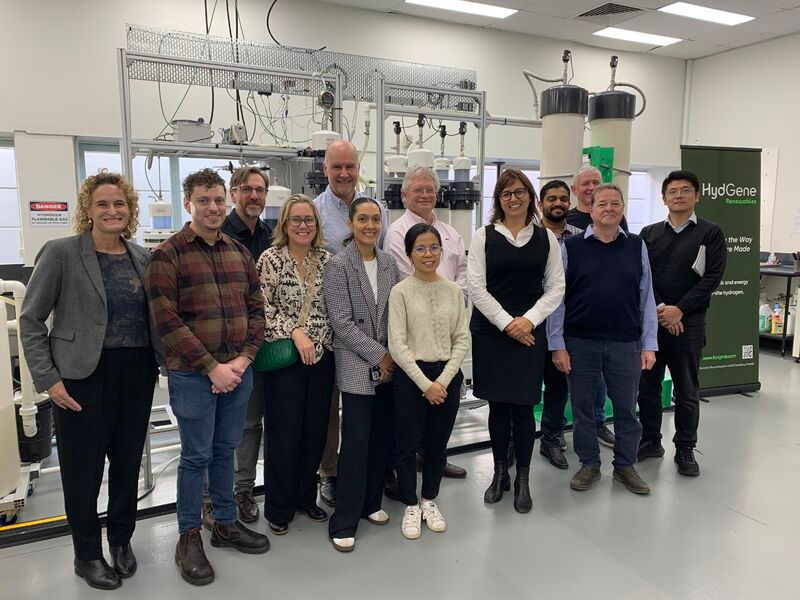
At HydGene’s pilot facility, the team successfully demonstrated continuous production of high-purity hydrogen from wheat straw using a fully commissioned pilot plant. Importantly, HydGene's engineered catalyst systems have now operated continuously for more than two years, validating the durability and stability of the platform.
“Demonstrating continuous hydrogen production from agricultural waste at pilot scale is a significant milestone for our team,” said Louise Brown, CEO of HydGene Renewables.
“Importantly, our catalyst systems have now operated continuously for more than two years — a key focus of our work in validating the platform. This progress is an important step toward decentralised ammonia production, where fertiliser can be produced directly from agricultural residues at the point of use.”
Key Results
The project delivered several important technical outcomes:
Continuous production of high-purity hydrogen from wheat straw in a fully commissioned pilot plant
Biocatalyst manufacturing scaled 10×, with catalyst systems operating continuously at pilot scale for more than two years
A validated pathway toward cost-competitive green fertiliser from agricultural waste
Up to 91% less energy use compared with conventional ammonia production
2.4 tonnes of CO₂ prevented per tonne of fertiliser, opening the door to carbon-negative fertiliser systems
Enabling Decentralised Fertiliser Production
HydGene’s platform is designed to enable a circular agricultural system in which crop residues and other agricultural wastes can be converted into hydrogen and fertiliser locally.
By avoiding the need for electrolysis and large-scale renewable electricity inputs, the technology offers a pathway to decentralised production that can be deployed where agricultural waste and fertiliser demand already exist.
Potential feedstocks include wheat straw, cotton gin trash, poultry litter, corn stubble and other agricultural residues.
This approach could help improve resilience in global fertiliser supply chains, which have faced significant disruptions in recent years.
HydGene acknowledges the support of the Australian Department of Industry, Science and Resources and Innovate UK through the AUKRHIP program, as well as collaboration with project partner Nium.


Comments